Texas is considering
By Silas Allen
The Dallas Morning News
(The Dallas Morning News) — Texas’ State Board of Education is expected to vote this month on a pair of proposals that would add to the growing presence of Christianity in classrooms across the state.
It’s an effort conservative leaders have championed, saying the state’s education system needs to return to foundational American values. Critics say the push for more Christian teaching would give students an incomplete picture of the nation’s history and leaves out other religious traditions.
The board is expected to take a final vote at a meeting this month on the state’s revised Texas Essential Knowledge and Skills for social studies. The standards dictate what skills and concepts students are expected to learn at each grade level. The standards include biblical figures such as Abraham and Moses alongside figures from American and Texas history such as George Washington and Sam Houston.
The board also is expected to vote on a required reading list that includes biblical passages, such as the stories of David and Goliath, the prophet Jonah being swallowed by a fish and the Road to Damascus, which recounts the apostle Paul’s conversion from a persecutor of Christians into a follower of Jesus.
A 2023 state law requires the board to develop a list of literary works students are required to read. The list must include at least one literary work per grade — well short of the roughly 200 titles included in a pared down list that received preliminary approval during the board’s January meeting.
Texas is considering
Board member Tiffany Clark, D-DeSoto, said in an email that public schools must serve all students, not pick which ones feel included and which are left out. That means the state can’t use policy to promote one religion over another. Although she’s a Christian herself, Clark said the state and its public schools has no business making rules that deal with faith.
“My faith is real to me. It guides how I move, how I treat people, how I show up,” she said. “But my faith does not need government endorsement to stand. And it definitely doesn’t need to be forced on somebody else to be valid.”
Board member Evelyn Brooks, R-Plano, said she’s comfortable with the idea of an optional literature course focusing on the Old and New Testaments, but only at the high school level.
Parents deserve the chance to teach their children their own religion before they’re exposed to something else at school, she said. It could be confusing for elementary school students to hear one set of religious ideas at home, then learn about another set of doctrines at school, she said.
Brooks also said she doesn’t support the literary works list. Her concerns about the list have less to do with any of the titles it includes than the number of works teachers are required to teach. Brooks, a former teacher, said she worries the list is so extensive teachers won’t be able to do anything else, robbing them of the ability to choose books that are a good fit for their classes or communities.
Texas is considering
Neither of the other two board members representing portions of North Texas — Pam Little, R-Fairview and Brandon Hall, R-Aledo — responded to calls or emails for comment. Hall, who serves as pastor of a church in Springtown, wrote on Facebook before the board’s January meeting that the reading list “would bring the Word of God back into schools in a meaningful way.”
Religion gains a presence in Texas classrooms
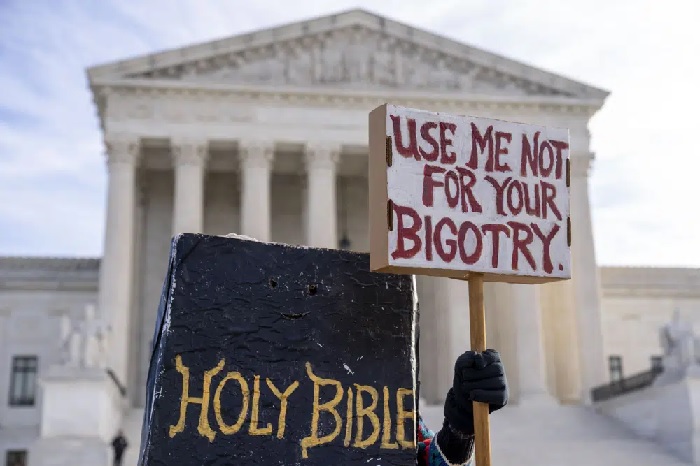
In 2024, the board narrowly voted to approve Bluebonnet Learning, an elementary school reading curriculum that includes Bible stories. Last year, state lawmakers passed a bill requiring school districts to display donated placards of the Protestant version of the Ten Commandments in classrooms. The law was challenged but has since been upheld by the 5th U.S. Circuit Court of Appeals.
Separately, lawmakers passed a bill last year requiring all Texas school boards to hold a vote on whether to designate time for prayer and Scripture reading. The law doesn’t require districts to adopt such a policy, only that they vote on one. Most North Texas school boards rejected the proposal.
Texas is considering
Mandy Drogin, a senior fellow with the Texas Public Policy Foundation, said the policies aren’t about proselytizing in school. They’re about making sure students have a basic understanding of the foundations of American society and Western civilization.
The foundation, a conservative think tank based in Austin, championed several of the policies giving Christianity a greater presence in Texas schools. In April, the Texas Tribune reported that the foundation gave a $70,000 grant to the university department of one of the content advisers leading the revamp of the social studies standards, prompting Democratic State Board of Education members to pause the process.
Drogin argued it’s impossible to disentangle American history from the Christian underpinnings of the nation’s founding. She noted the signers of the Mayflower Compact, the first governing document of the Plymouth Colony, wrote that they undertook the journey from England “for the Glory of God, and Advancement of the Christian Faith.”
“No one’s saying to worship Jesus. No one’s saying anything that is proselytization,” she said. “But we have to make sure that students, American kids, understand how America became what we are today.”
Emphasizing Christianity’s role in American history
Texas is considering
Texas students already learn about religion in their social studies classes. But those lessons generally deal with concepts such as the role of religious ideas in shaping historical events and the cultural impact of various world religions.
The proposed standards go further, placing greater emphasis on Christianity’s role in American history and downplaying the impact of other faiths. Much of the proposed standards’ dealings with Islam focuses on conflicts between Christians and Muslims. The board scrapped a standard dealing with Muslim scholars’ contributions to the development of algebra and astronomy at its April meeting.
During public testimony around the new social studies standards in April, Melinda Preston, chair of the Denton County Republican Party, called on the board to “return to educating our students in truth.” She argued the United States was founded on Judeo-Christian values, and biblical teaching was one of the foundations of the early American educational system.
As an example, Preston pointed to the New England Primer, an educational text that was published in Boston in the late 1600s and remained in widespread use for more than a century. The primer combined reading instruction with Puritan theology and included passages from the King James Bible.
Preston also pointed to two of the country’s oldest and most prestigious universities, Harvard and Yale, as examples of the presence of Christianity in the American educational system from the earliest days. Both universities were founded by Protestant clergymen and originally focused on theological education.
Texas is considering
“From the very beginning, education in America was closely tied to faith and moral instruction,” Preston said. “As early as the 1600s, the Bible was a central tool for teaching literacy and values in colonial schools.”
Push for religion in Texas schools has long history
Mark Chancey, a professor of religious studies at Southern Methodist University, said the push for more religious content in Texas’ public school classrooms goes at least as far back as the 1980s, he said. But the issue has gained more traction over the past decade.
Chancey said he supports “academically informed, non-sectarian study of Christianity,” as well as other religious traditions and sacred texts in schools. But he argued the board is giving privilege to Christianity and minimizing discussion of other faiths. The importance of Christianity in American history is worthy of study, he said, but he worries the choices of emphasis in the social studies standards will leave students with a false impression.
For example, the standards include references to the Christian underpinnings of the movement to abolish slavery. But the standards make no mention of the fact that slaveholders also used the Bible to defend the practice. That discrepancy leaves students with an incomplete picture of that period in history, Chancey said.
Texas is considering
A student perspective on religion in schools
Iniya Nandakumar, a student at Coppell High School, said she worries about how the growing presence of Christianity in public schools will affect students’ ability to learn. Nandakumar, whose family is Hindu, said there are students in her school who practice Christianity, Islam, Hinduism and Sikhism. When the government begins to favor one religion over another in schools, some students will be excluded, she said.
Nandakumar said she’s glad to have friends from a broad array of backgrounds and learn more about how each of their religions work, while still holding on to her own religious practices. But when she sees Christianity given higher status as a matter of policy, she feels like students like her aren’t being represented.
In a country like the United States, where everyone comes from a different background and many faith traditions have a longstanding presence, Nandakumar said it makes no sense for the government to impose a single religion on people who don’t practice it.
“I think that public schools are one of the few places that are meant to serve every student equally, regardless of their religion and background,” she said.
The State Board of Education is scheduled to meet June 22-26 in Austin.
©2026 The Dallas Morning News. Distributed by Tribune Content Agency, LLC.