
Saab’s handover to the US
By Antonio María Delgado
Miami Herald
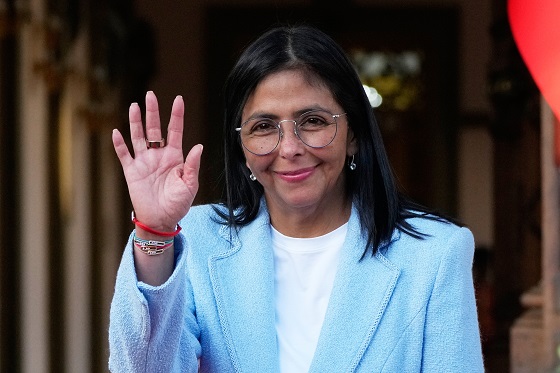
(Miami Herald) Venezuelan President Delcy Rodríguez’s decision to hand over regime financial operator Alex Saab to the United States to face corruption charges has placed all members of Venezuela’s socialist ruling movement at risk of facing the same fate, an influential hardliner claims.
Mario Silva’s comments, delivered in a video posted on social media, offer a new glimpse into the rapidly widening fault lines inside the Caracas regime, as Rodríguez seeks to appease the Trump administration while simultaneously trying to maintain control over the socialist movement launched by late President Hugo Chávez a quarter century ago.
Silva, the longtime host of the state-aligned television program La Hojilla — The Razor Blade — has for weeks warned that the balancing act is doomed to fail and that Rodríguez and her allies in the interim government that took power after the pre-dawn military operation that extracted former strongman Nicolás Maduro would ultimately be betrayed by the United States.
A staunch Maduro ally who was pushed out in March from the state-run network Venezolana de Televisión, Silva has emerged as perhaps the most visible public face of discontent within the so-called chavismo duro — hardline Chavismo.
Saab’s handover to the US
This week’s comments appeared aimed at senior ruling party figure Diosdado Cabello, the interior minister who recently accused Silva of fueling divisions within the Chavista movement through increasingly confrontational rhetoric amid mounting tensions in Venezuela’s post-Maduro political landscape.
In his commentary, Silva argued that Cabello and other senior officials — including Rodríguez herself — now face shared risks following the decision to hand over Saab, who appeared Monday in federal court in Miami to face new money-laundering charges after being deported from Venezuela over the weekend.
“When I spoke about the risks of a certain decision, I was referring to everyone,” Silva said. “Diosdado Cabello, Delcy Rodríguez, the entire government.”
To underscore what he described as the growing threat facing the ruling movement, Silva read aloud a social media post by Republican U.S. Rep Carlos Giménez of Miami, a close ally of President Donald Trump and one of the fiercest critics of Venezuela’s socialist leadership in Washington.
In the message, Giménez urged Rodríguez to arrest Cabello, whom he described as “one of the regime’s most powerful enforcers” allegedly tied to “corruption, repression and criminal networks that have destabilized an entire region.”
The congressman also called on Rodríguez to hand Cabello over to U.S. authorities, arguing that “accountability cannot be selective” and that “justice must be comprehensive.”
“It’s time to finish the job,” Giménez wrote in the statement quoted by Silva.
Saab’s handover to the US
Cabello, one of the most influential figures in the regime and a longtime ally of Maduro, has been accused by U.S. authorities of narcotics trafficking, corruption and ties to organized crime — allegations he has repeatedly denied.
Washington has for years offered multimillion-dollar rewards for information leading to the arrest or conviction of top Venezuelan officials, including Cabello.
Silva portrayed Giménez’s comments as evidence that Washington’s pressure campaign against Venezuela’s leadership remains active despite the political realignment that followed Maduro’s capture earlier this year.
“If there is another attempt to capture Diosdado Cabello, the people will respond because we will not accept that attack again,” Silva said. “Any attack by the gringos on Venezuelan soil, on our homeland, on our own ground, will be answered.”
The comments come as analysts increasingly speculate about growing distrust and internal maneuvering within Venezuela’s ruling coalition following Maduro’s Jan. 3 capture in a U.S.-backed operation in Caracas and the subsequent rise of Rodríguez as interim president.
Brian Naranjo, a retired U.S. diplomat who served as deputy chief of mission at the U.S. Embassy in Caracas from 2014-18 before being expelled by Maduro’s government, said Silva’s warning reflects mounting anxiety among hardline Chavistas who fear they could eventually become expendable in Rodríguez’s effort to consolidate power.
Saab’s handover to the US
“The delivery of Alex Saab showed that the Rodríguez siblings are willing to bend strategically in ways Maduro never was,” Naranjo said in comments published by the Venezuelan commentary website La Gran Aldea — The Great Village. “People around Diosdado Cabello understand that.”
Naranjo argued that the Rodríguez siblings — Delcy and National Assembly President Jorge Rodríguez — are attempting to stabilize their rule by accommodating key U.S. demands while simultaneously restructuring the Venezuelan state to strengthen their own control.
The Reuters news agency has previously reported that former U.S. chargé d’affaires Laura Dogu presented Caracas with a list of at least seven individuals Washington expected Venezuelan authorities to hand over. Alex Saab, the Colombian businessman and former Maduro ally recently deported to the United States, allegedly headed that list.
“There’s no way Saab left Venezuela without the Rodríguez siblings’ consent, or at least their tacit blessing,” Naranjo said.
The former diplomat said Cabello and other hardliners may increasingly view Rodríguez’s rapprochement with Washington as a direct threat to their survival.
“The Rodríguez siblings are very capable of deceiving President Trump and his closest advisers before eventually turning on them once they feel secure again,” Naranjo warned.
Naranjo described Delcy Rodríguez as pragmatic and highly calculating, while reserving especially harsh criticism for her brother Jorge Rodríguez, whom he called “probably the most evil man” he encountered during his 32-year diplomatic career in Latin America.
He also warned that Washington’s current approach toward Venezuela appears focused more on stability and economic normalization than on democratic transition.
“At this moment,” he said,” there is no coherent policy in the White House regarding democracy, rule of law, human rights or political transition.”
©2026 Miami Herald. Visit at miamiherald.com. Distributed by Tribune Content Agency, LLC.