
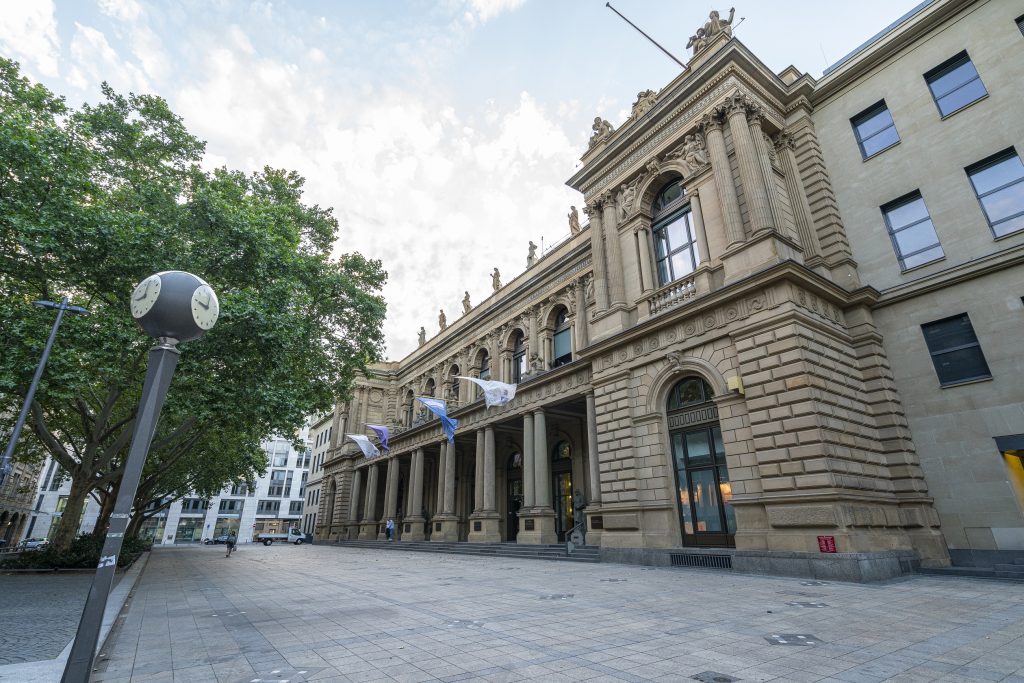
European markets closed bouyantly
Frankfurt — European markets closed on a strong note on Wednesday with investors picking up stocks across the board amid growing optimism about a de-escalation in the Middle East war after US President Donald Trump said that US forces would leave Iran in “two or three weeks.”
Trump argued that the US does not have to reach a negotiated settlement to end the war with Iran, calling a deal “irrelevant” because “everything’s been bombed out.” However, Trump claimed in a Truth Social post this morning that Iran’s new regime president has asked for a ceasefire, which he said the US would consider when the Strait of Hormuz is “open, free, and clear.”
“Until then, we are blasting Iran into oblivion or, as they say, back to the Stone Ages!!” Trump said. However, a report from Al Jazeera said an Iranian official clearly denied that Tehran has requested a ceasefire.
Investors also digested regional PMI data, and a slew of corporate updates. The pan European Stoxx 600 climbed 2.5%. The UK’s FTSE 100 moved up 1.85%, Germany’s DAX surged 2.73% and France’s CAC 40 jumped 2.1%. Switzerland’s SMI finished with a gain of 1.68%.
Among other markets in Europe, Austria, Belgium, the Czech Republic, Denmark, Finland, Greece, Iceland, Ireland, the Netherlands, Poland, Portugal, Spain and Sweden closed sharply higher, gaining 1.5%-3.3%. Russia and Turkey also ended on a bright note, while Norway settled lower.
European markets closed bouyantly
In the UK market, shares from mining and banking sectors turned in a fine performance. Stocks from several other sectors too saw hectic buying. Babcock International soared 9.5%. Rolls-Royce Holdings moved up 6.7%. 3i Group, Endeavour Mining, Fresenillo, Lloyds Banking Group, IAG, Scottish Mortgage, Natwest Group, HSBC Holdings, Polar Capital Technology Trust, Anglo American, Melrose Industries, St. James’s Place and Barclays gained 5%-6%. M&G, Weir Group, ICG, Antofagasta, BAE Systems, Lion Finance, Prudential, Pershing Square Holdings, Standard Life, Spirax Group and Smiths Group also moved up sharply.
Berkeley Group Holdings tumbled nearly 10% after the company gave a cautious management approach amid headwinds caused by war in the Middle East. The company now predicts cumulative profits for the next four-years of over £1.4 billion ($1.86 billion), a possible average of around £350 million per year compared with its previous estimate for profits of £450 million for the full year 2027. BP and Shell lost 5% and 3.9%, respectively, weighed down by a fall in oil prices. RightMove and British American Tobacco also ended notably lower.
In the German market, Rheinmetall climbed more than 10%. Siemens Energy surged 7%, while Infineon, Continental, Deutsche Bank, Commerzbank, Siemens, Deutsche Post, MTU Aero Engines, Vonovia and Zalando gained 3%-6%. Porsche Automobil Holding, Volkswagen, Daimler Truck Holding, Merck, Heidelberg Materials, Allianz, RWE, Gea Group, E.ON, Symrise, SAP, BMW and Mercedes-Benz also posted strong gains.
In the French market, Societe Generale, ArcelorMittal, STMicroelectronics, Thales, BNP Paribas, Legrand, Schneider Electric, Airbus, Stellantis, Credit Agricole and Safran gained 4%-7%. Eurofins Scientific, Hermes International, Renault, Vinci, Saint-Gobain, Vinci, Bouygues, Accor, Michelin, Kering, Unibail Rodamco, L’Oreal and Engie also climbed up sharply. TotalEnergies, EssilorLuxottica, Teleperformance and Pernod Ricard ended sharply lower.
European markets closed bouyantly
Germany’s manufacturing sector grew the most since May 2022, underpinned by output and new orders in March. The main driver of the rise in the index was suppliers’ delivery times index. However, cost pressures intensified amid the war. The final manufacturing PMI posted 52.2 compared to 50.9 in the previous month and the flash score of 51.7.
The eurozone’s manufacturing sector expanded at the fastest pace since mid-2022 in March, driven by increases in both production and new orders but the war in the Middle East disrupted global logistics and intensified price pressures. The final manufacturing purchasing managers’ index (PMI) climbed to a 45-month high of 51.6 in March from 50.8 in February and remained moderately above the flash estimate of 51.4.
The eurozone’s unemployment rate rose slightly in February, data from Eurostat showed. The unemployment rate rose to 6.2% from 6.1% in January. In the same period last year, the jobless rate was 6.3%. Economists had forecast the rate to remain at 6.1% in February. In the EU, the unemployment rate was stable at 5.9% in February. Meanwhile, the youth unemployment rate rose slightly to 15.3% from 15.2% a month ago.
The French manufacturing sector stagnated in March after production declined following back-to-back months of growth and new orders declined sharply as clients postponed or cancelled their orders citing uncertainty from the Iran war. The final factory PMI edged down to 50 from 50.1 in February. The flash score was 50.2.
Data from S&P Global showed the S&P Global UK Manufacturing PMI dropped to 51 in March from 51.7 in the previous month, revised downwards from the preliminary estimate of 51.4 but remaining firmly above the initial market expectation of 50.1.
©2026 dpa GmbH. Distributed by Tribune Content Agency, LLC.