
Cuba has reeled oil crisis
By Patrick J. McDonnell, Kate Linthicum and Ana Ceballos
Los Angeles Times
(Los Angeles Times) — Cuba, reeling from an oil shortage, has begun direct talks with the United States in an effort to solve “bilateral differences” between the two countries, Cuban President Miguel Díaz-Canel said Friday.
The comments, broadcast nationwide in Cuba, are the first confirmation of negotiations between the Trump administration and Havana. The U.S. and Cuba have been fierce adversaries for nearly 70 years, since Fidel Castro’s revolution toppled the U.S.-backed dictator Fulgencio Batista.
The Trump administration has been ratcheting up pressure on Cuba’s communist government for months, choking off oil supplies to the island and threatening military action against its leaders.
“It may be a friendly takeover, it may not be a friendly takeover,” Trump warned this week.
Ricardo Torres, an economist and research fellow at American University in Washington, said Trump’s threats and Cuba’s deepening energy crisis had forced Havana to the negotiating table.
Cuba has reeled oil crisis
“The country is barely surviving,” Torres said, citing rolling blackouts and severe shortages of food, medicine and gasoline. “Cuba doesn’t have a choice. It has to talk.”
Still, what exactly the Trump administration hopes to achieve in the negotiations is not clear.
Trump and Secretary of State Marco Rubio have insisted that Cuba must change, but have not said whether that would entail an economic overhaul, a sweeping political transition, or both.
In his 90-minute address on Friday, Díaz-Canel suggested that from Cuba’s perspective, a democratic form of government is not up for discussion.
Discussions with Washington, he said, have been based on “respect for the political systems of both countries, sovereignty and our government’s self-determination.”
Díaz-Canel, who in the past has forcefully criticized the U.S. as an “imperialistic force” responsible for a “genocidal blockade,” refrained from attacking Washington during his speech, adopting a more conciliatory tone.
“The aim of these talks is, in the first place, to identify which are the bilateral problems that need a solution,” Díaz-Canel said. “And, on the other hand, find solutions for those problems that have been identified.”
From Trump’s perspective, the principal bilateral “problem” is an entrenched communist bureaucracy that has not adjusted to the modern era.
Cuba has reeled oil crisis
Cuban officials, on the other hand, blame the more than 60-year U.S. trade embargo for the island’s economic woes.
The new talks with Cuba are the most consequential engagement between the two governments since the administration of former President Obama, who sought to normalize relations with the country.
Obama reopened the U.S. Embassy in Havana, relaxed various travel and trade restrictions, and visited the island in 2016, shaking hands with then-President Raul Castro, Fidel’s brother.
But Trump, in his first term, rolled back most of Obama’s efforts at normalization, returning U.S.-Cuba relations to a tense, Cold War-type standoff.
Friday’s news comes days after the U.S. attacked Iran and two months after U.S. forces, deployed by Trump, deposed Venezuelan President Nicolás Maduro, a longtime Cuban ally.
While Maduro was flown to New York to face drug-trafficking charges, most of his leftist Chavista regime remains in power in Caracas, and is now cooperating with Trump on oil production and exports.
Political analysts speculate that Trump may take a similar approach in Cuba, seeking to leave its political system more or less intact while pushing for economic opening.
Rubio, the son of Cuban immigrants, has also suggested that the Trump administration is not pushing for a dramatic political overhaul.
Cuba has reeled oil crisis
“Cuba needs to change,” Rubio said last month, but added: “It doesn’t have to be change all at once. It doesn’t have to change from one day to the next.”
Cuba might be able to appease the American government with relatively small concessions, such as the release of political prisoners. This week Havana said it plans to release 51 prisoners in the coming days “in the spirit of goodwill.”
Michel Fernandez Perez, vice director of the Florida-based NGO Cuba Proxima, said most Cuban Americans dream of a full democratic transition in Cuba, with a range of political parties competing in free elections.
But he said his group, at least, would also support less sweeping change for the time being as long as it improved the lives of people l on the island.
“If it means that Cubans live in less misery and have more opportunity, we would support that,” he said.
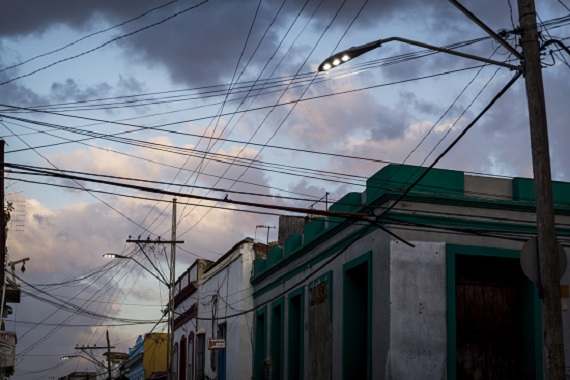
Cubans, long accustomed to hardships, say the recent fuel shortages have left them struggling to survive and feed their families.
“We are worse off than ever,” said Bruno Díaz, 56, a taxi driver in Havana, said in a phone interview. “I had to stop working because I don’t earn enough to buy gasoline. Prices have gone through the roof. No one can pay for gas. Everyone is desperate.”
Along with driving a cab, Díaz is a musician, supplementing his income by playing in clubs frequented by tourists. Now, the foreign visitors are mostly gone, a lack of jet fuel bludgeoning the critical tourism sector.
Cuba has reeled oil crisis
“There is no tourism; we have no way to make a living,” Diaz said. “The situation is very grim.”
Rumors of direct negotiations between Cuba and the United States have been circulating for months, but neither Washington nor Havana had confirmed the talks until now.
On Tuesday, the Cuban ambassador to the United States, Lianys Torres Rivera, told The Times that the Cuban government was “ready to engage with the U.S. on the issues that are important for the bilateral relations, and to talk about those in which we have differences.”
Trump responded to the Cuban leader’s willingness to negotiate on Friday morning by amplifying a news article with the headline: “Cuba confirms talks with Trump officials, raising hopes for U.S. deal.” He posted that on his Truth Social account.
The confirmation of talks is a hopeful sign, Fernandez said, although he said he wished civil society groups were a part of the talks.
It was impossible to say what would come of the talks, he said. Trump’s mercurial leadership style and disregard for established political norms means anything is possible, Fernandez said.
“It’s hard to predict what the United States wants or will achieve,” he said. “The U.S. government is not guided by principals or laws, but the whims of the president and his personal desires.”
(McDonnell and Linthicum reported from Mexico City and Ceballos from Washington. Special correspondent Cecilia Sánchez Vidal in Mexico City contributed to this report.)
©2026 Los Angeles Times. Visit at latimes.com. Distributed by Tribune Content Agency, LLC.